Platforms like Wix, Squarespace, and WordPress.com (the hosted WordPress builder) have made it easier than ever to build a website yourself. Drag, drop, and publish — all for a few hundred pounds or even free.
Many small businesses or start-ups who are cost concious can be forgiven for seeing a DIY website as an obvious choice. It’s quick, cheap, and gives you control. But here’s the uncomfortable truth: what looks like saving money upfront can often cost more later in lost traffic, poor performance, and missed opportunities.
So, should you DIY your website or hire a professional developer? Let’s compare.
DIY platforms are popular for a reason. They offer:
They’re great for:
In these cases, a DIY build does the job. You get a presence online quickly without spending big.
But here’s the flip side: when you rely on a DIY website builder for a business website, problems often appear.
Sure, it’s cheap — but only if you value your time at zero. Building even a basic site takes hours of trial and error. Every hour spent tweaking templates is an hour not spent running your business. In other words it’s a false economy.
DIY websites often lack effective SEO configuration. Titles, headings, alt text, and internal linking are either missing or clunky. What’s more, it is highly likely a site built by owner or from a template focused web builder will lack structured data (schema markup), the result being your site is invisible in rich search results.
Many templates are bloated with unnecessary code, making sites slow. Add in uncompressed images and third-party scripts, and your bounce rate climbs. Google’s Core Web Vitals penalise slow sites in rankings.
DIY sites (especially WordPress with plugins) are vulnerable if not maintained. Maintenance is never ‘free’ either in time or in money. If you DIY your website and do not have an ongoing care plan in place -updates, patches, and hosting security responsibilities all fall on your shoulders.
When your business grows, a DIY platform can become a dead end when the business needs something beyond show and tell. Need advanced e-commerce, multi-language support, or system integrations? That often means starting over.
In short: DIY can get you online, but it’s rarely built to last.
Hiring a professional web designer/developer costs more — but you get much more in return. A professional website build is tailored, not templated.
Here’s what you can expect:
A professional build turns your site into a business asset, not just a brochure.
So, when does DIY make sense, and when is professional the smarter investment?
Think of it this way: DIY can be a starting point. But if your business depends on your website, professional development is non-negotiable.
A DIY website is like IKEA furniture:
A professional website is like custom joinery:
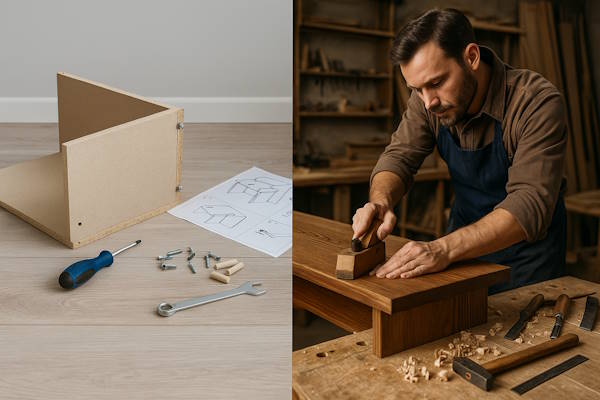
Both get you a table. Only one becomes a centrepiece you’ll rely on for years.
DIY website builders are amazing tools for quick, low-stakes projects. But for businesses that need visibility, speed, and growth, they can end up being false economy.
Professional websites cost more because they do more: they’re optimized, secure, and scalable. In the long run, they save money by generating leads and avoiding costly rebuilds.
DIY websites get you online. Professional websites get you found.

Managed by HDUK Limited. 167–169 Great Portland Street, 5th Floor, London, W1W 5PF.